
HeatShield Chimney Sweep in Borough Park: A Homeowner’s Guide
If someone recommends HeatShield before they’ve run a camera through your flue, you don’t have enough information to approve that job. HeatShield is a resurfacing system, not a liner replacement, and whether it’s the right answer for your chimney depends entirely on what the inside of your flue actually looks like. This guide walks through the product line, the conditions each formula addresses, and where the honest cutoff sits between resurfacing and full relining. If you’d rather have a specialist sort it out, call (833) 554-1032.
What Is HeatShield, and Why Does It Come Up in Borough Park?
HeatShield is a resurfacing system applied to the inside of a clay tile flue to seal cracks, gaps, and deteriorated mortar joints without tearing out the existing tiles. It’s manufactured in three distinct formulas, and each one addresses a different condition. Knowing which is which matters, because a quote that names HeatShield without naming the specific system is a quote you can’t compare to anything.
The three systems break down like this:
- Cerfractory Flue Sealant – the workhorse formula. It’s applied as a coating over the full length of a flue that’s still structurally intact but has surface cracks, spalling, or open joints. It seals the flue as a single continuous surface.
- Joint Repair System – targeted at open or eroded mortar joints between tiles. Instead of coating the whole flue, it fills the joints themselves, restoring the seal at the exact points where combustion gases escape.
- SmoothOver – a smoothing compound for flues with rough, pitted, or uneven interior surfaces. Rough flues collect creosote faster and draft poorly. SmoothOver restores a consistent bore so the flue performs the way it was designed to.
Borough Park’s housing stock makes this a live question on nearly every block. The neighborhood’s pre-war brick rowhouses and apartment buildings were built with clay tile flues that have now been in service for 60 to 80 years or more, and clay tile simply doesn’t last forever. Mortar joints erode, tiles crack from thermal cycling, and the flue that drafted perfectly in 1940 may be quietly leaking today. A chimney sweep with a camera is how you find out which of those three HeatShield systems, if any, applies to your building.
When Is HeatShield the Right Answer, and When Is It Not?
HeatShield is appropriate when the clay tiles are still in place, still aligned, and structurally sound, but the flue surface or joints have deteriorated. It is not appropriate when a tile has shifted, cracked through, or come loose from the flue wall. In that case, the structural problem remains underneath the coating, and no sealant fixes a missing tile.
Here’s how the tile-condition threshold breaks down in practical terms:
- Hairline surface cracks, open joints, rough interior – HeatShield is a legitimate, cost-effective answer. The tile structure is intact; the seal is what failed.
- Spalling or flaking tile faces with the tile body still sound – usually a HeatShield candidate, depending on how deep the spalling goes. Camera documentation decides it.
- Cracked-through, shifted, or missing tiles – full relining is the structurally correct answer. A flexible liner system like DuraFlex runs the full length of the flue and provides a new, continuous, listed venting path independent of the failing tile.
- Flue serving a gas or oil appliance with a damaged liner – relining is almost always the answer. HeatShield is formulated for wood-burning flues and is not a substitute for an appliance-appropriate liner.
There’s a real argument that applying HeatShield over a flue that needed relining is an expensive deferral. It buys time, but the time has an end. In our experience, the honest answer to “do I really need a new liner” is sometimes yes, and a specialist should be willing to say so plainly, with the camera footage to back it up. Our technicians have up to 9 years of experience assessing exactly this distinction, and we’d rather tell you the liner is the answer than sell a reseal that won’t hold.
What Does a Proper Pre-Application Inspection Look Like?
A proper pre-application inspection means a camera scan of the full flue length with documented video or photo evidence, plus flue sizing verification and a specific assessment of any offset sections in the chimney. Anything less than that isn’t an inspection, it’s a sales visit.
Here’s what should actually happen before anyone applies HeatShield to your chimney in Borough Park:
- Full-length camera scan. The camera runs from the top of the flue or the firebox connection to the termination. You should be able to see the footage yourself, and the technician should narrate what you’re looking at.
- Flue sizing verification. HeatShield application depends on the nominal flue size. If the flue is oversized for the appliance or undersized for the fireplace opening, the sealant is being applied to a chimney with a draft problem it won’t fix.
- Offset assessment. Offset sections are where the flue changes direction, and they’re where sealant application is most limited. HeatShield applicators have to work around offsets, and if the flue has several, the coverage may not be uniform. This needs to be identified before the job, not discovered during it.
- Joint and tile condition mapping. Which joints are open, which tiles are cracked, and which sections look sound. This is what determines whether you need Cerfractory Flue Sealant, Joint Repair, or SmoothOver.
We offer chimney inspection in Borough Park as a standalone, documented service precisely because the inspection has to come first, not follow the recommendation. If the scan shows the flue is a candidate, HeatShield application runs through a full flue cleaning, sizing confirmation, and controlled application before any curing begins.
What Happens After Application: Curing and Your First Fires
HeatShield needs to cure before you burn again. In practice, that means waiting a set period after application (the manufacturer’s instructions determine the exact window, and your applicator should tell you), then starting with small, moderate fires rather than loading the firebox the way you normally would. Gradual heat helps the coating finish curing evenly.
What to expect, honestly:
- The first few fires may produce a faint smell as residual moisture leaves the coating. This fades.
- Drafting may feel different in the first week. A sealed flue drafts more consistently than a leaking one.
- Some mild discoloration or dust near the firebox connection is normal after the initial burn.
What’s not normal is persistent odor after several fires, heavy smoke rollback from the fireplace opening, or a dramatic change in draft. Those are reasons to call, not wait. Borough Park homes tend to sit close together and share party-wall chimney stacks, so any draft issue is worth checking promptly before it becomes a flue-size or termination problem.
When to Call a Pro vs. What You Can Check Yourself
You can check a few things from the ground, and it’s worth doing before you book anything. You cannot check the inside of your flue without a camera, and nobody should be on your roof with a ladder and a hope.
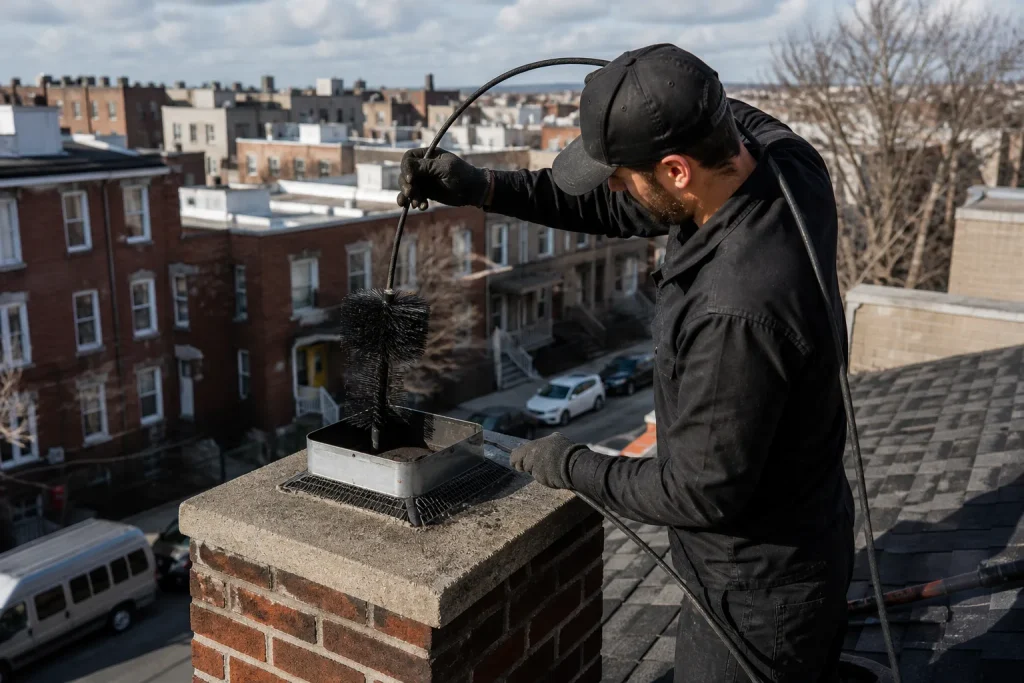
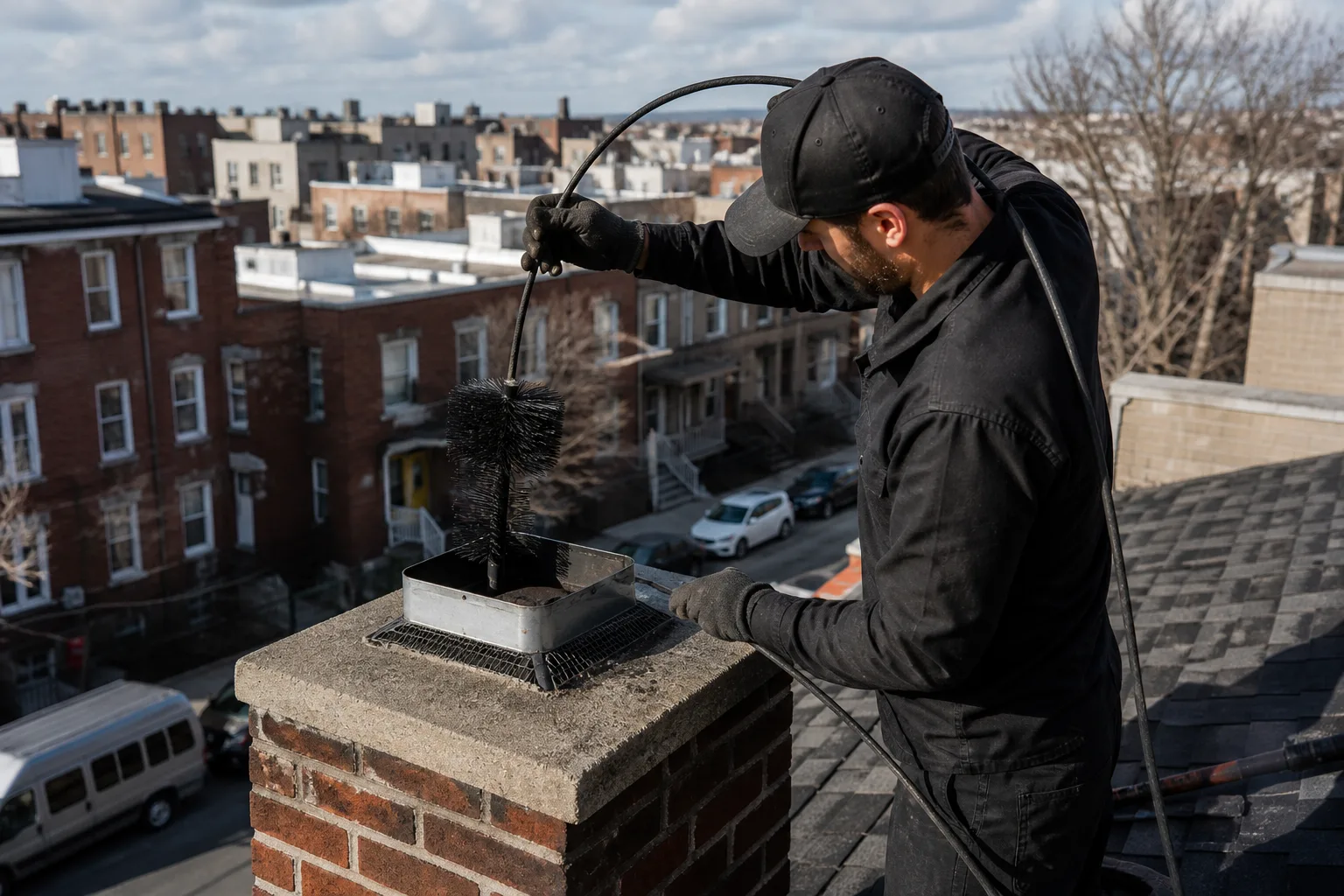
What a homeowner can safely note before calling: visible cracks in the chimney crown, loose or missing chimney cap & crown, spalling brick or flaking mortar on the exterior stack, a smoky smell in the house on damp days, and any soot staining around the firebox. These are visible signals that the flue inside likely needs a camera scan, which is exactly the starting point for any HeatShield or relining decision.
What you should not do: climb onto the roof to look down the flue, attempt any flue cleaning yourself, or apply anything inside the firebox or flue. Chimney work involves height, heat, and combustion byproducts, and a trained professional with proper camera and containment equipment is the right call. Related services in Borough Park worth reviewing if the inspection turns up structural issues include chimney repair, which covers masonry and component work in the same visit as the sweep or inspection.
The Bottom Line
HeatShield extends the serviceable life of a clay tile flue that’s still structurally sound; it does not replace a failed liner, and it should never be the first thing recommended before a camera scan documents the tile condition. If your Borough Park building has an aging clay flue, the sequence is: camera scan, condition mapping, then decide between smoothing or sealing with HeatShield, joint repair, or a full reline using a system like DuraFlex. We install both, plus Gelco and Olympia Chimney liner components where they suit the job, so the recommendation isn’t pre-set by what’s on the shelf.
If you’re in Borough Park and want an honest assessment of whether your flue is a HeatShield candidate or a relining job, Chimney Sweep Borough Park offers free estimates and documented camera inspections. Call (833) 554-1032. We answer 24/7. Fast dispatch from 7am to 7pm, Sunday through Friday.
Frequently Asked Questions
No. HeatShield resurfaces the inside of an existing clay tile flue that’s still structurally intact. A liner replacement installs a new venting path, typically a flexible liner system, and is the correct answer when tiles are cracked through, shifted, or missing. The camera scan determines which applies.
Only a camera scan can tell you. Visible exterior signs like cracked crowns, spalling brick, or soot staining suggest the flue needs inspection, but surface condition alone doesn’t confirm it. A documented scan of the flue interior is the starting point. Call (833) 554-1032 to book one.
It depends on what’s wrong. Cerfractory Flue Sealant covers a full flue with surface cracks or spalling. Joint Repair targets open mortar joints between tiles. SmoothOver restores a rough or pitted interior surface. Your applicator should name the specific system in the estimate, not just “HeatShield.”
HeatShield seals and smooths the existing clay flue. A full reline installs a new, continuous venting path using a product like DuraFlex, and it’s structurally necessary when the tiles themselves have failed. A reseal over failed tiles buys time, not a permanent fix. Call (833) 554-1032 for a free estimate that tells you which you actually need.
Written by the team at Chimney Sweep Borough Park.
Need Chimney Cleaning Help?
Call Chimney Sweep Borough Park - the local pro we connect you with is licensed and insured, with free written estimates in Borough Park.
(833) 554-1032