
Last updated November 22, 2026
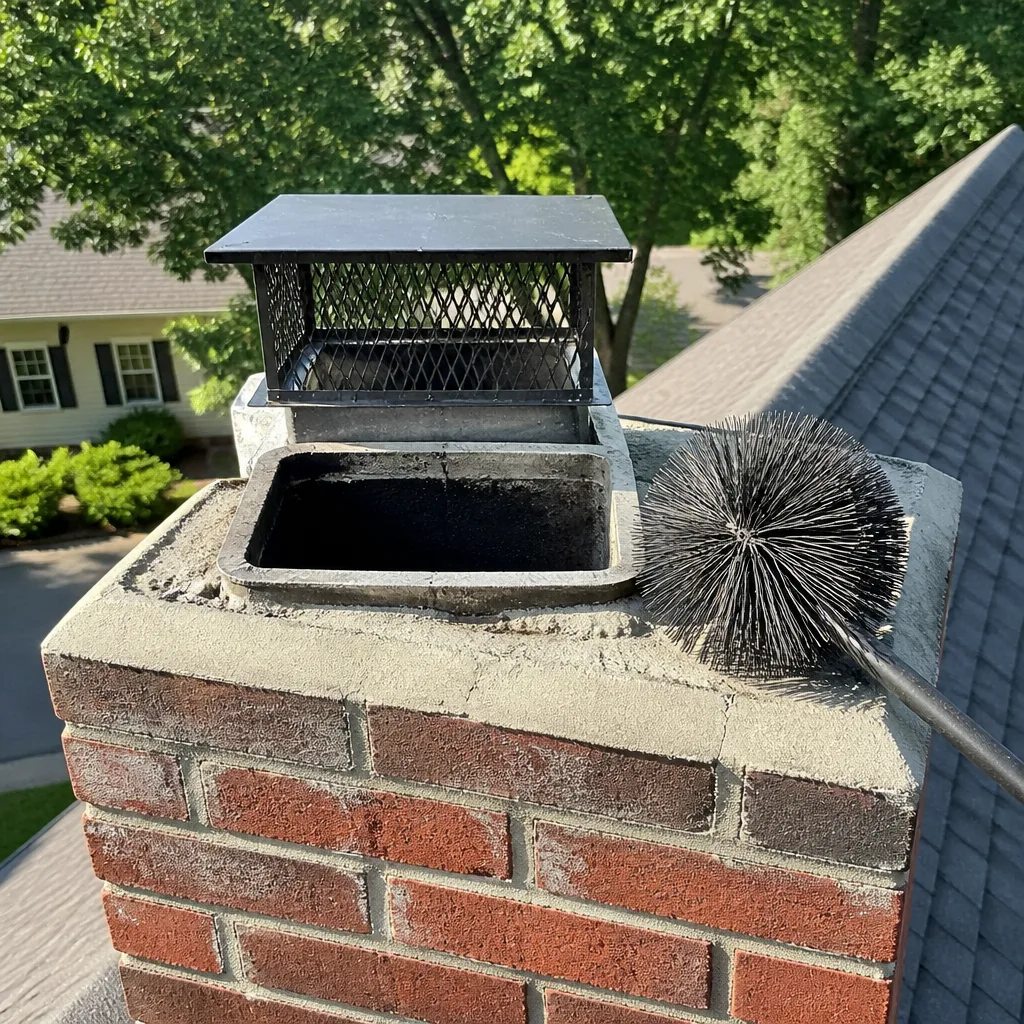 Sweep & inspection
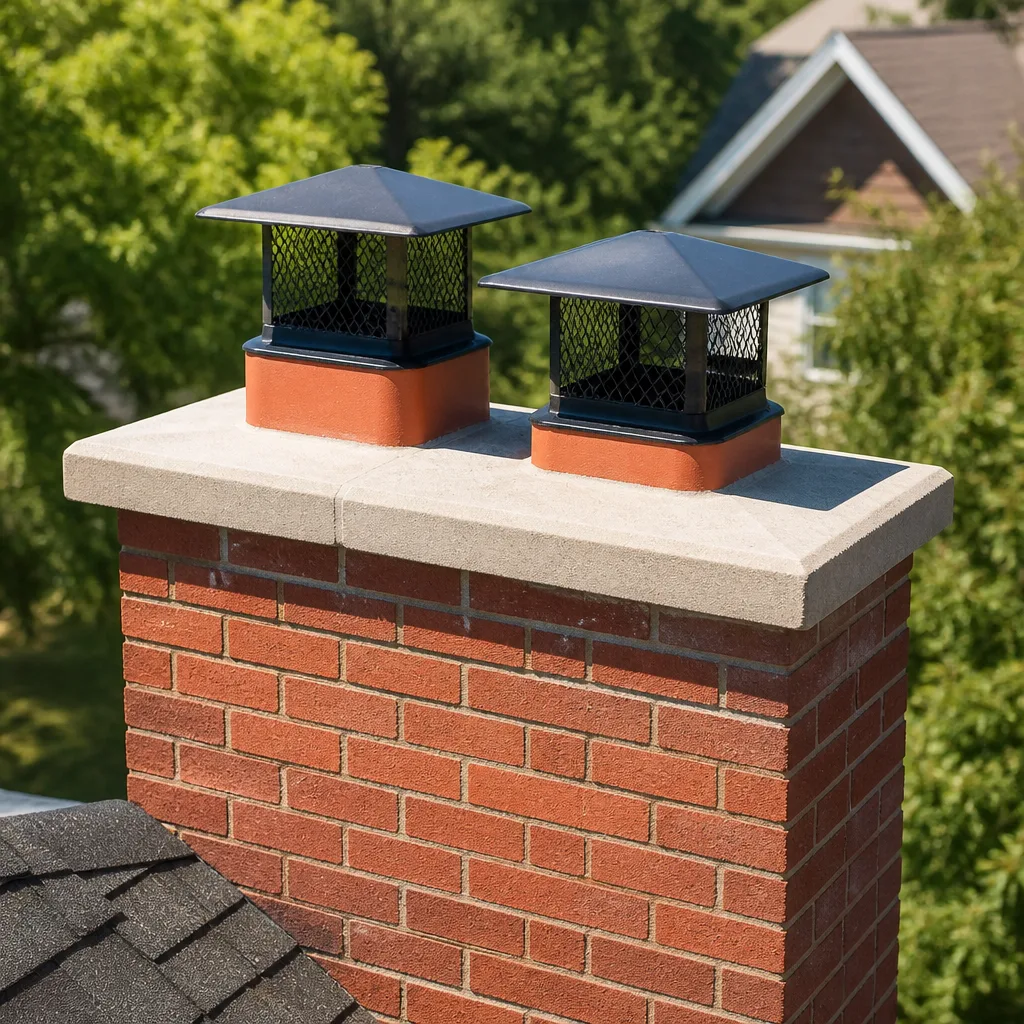 Caps & crowns
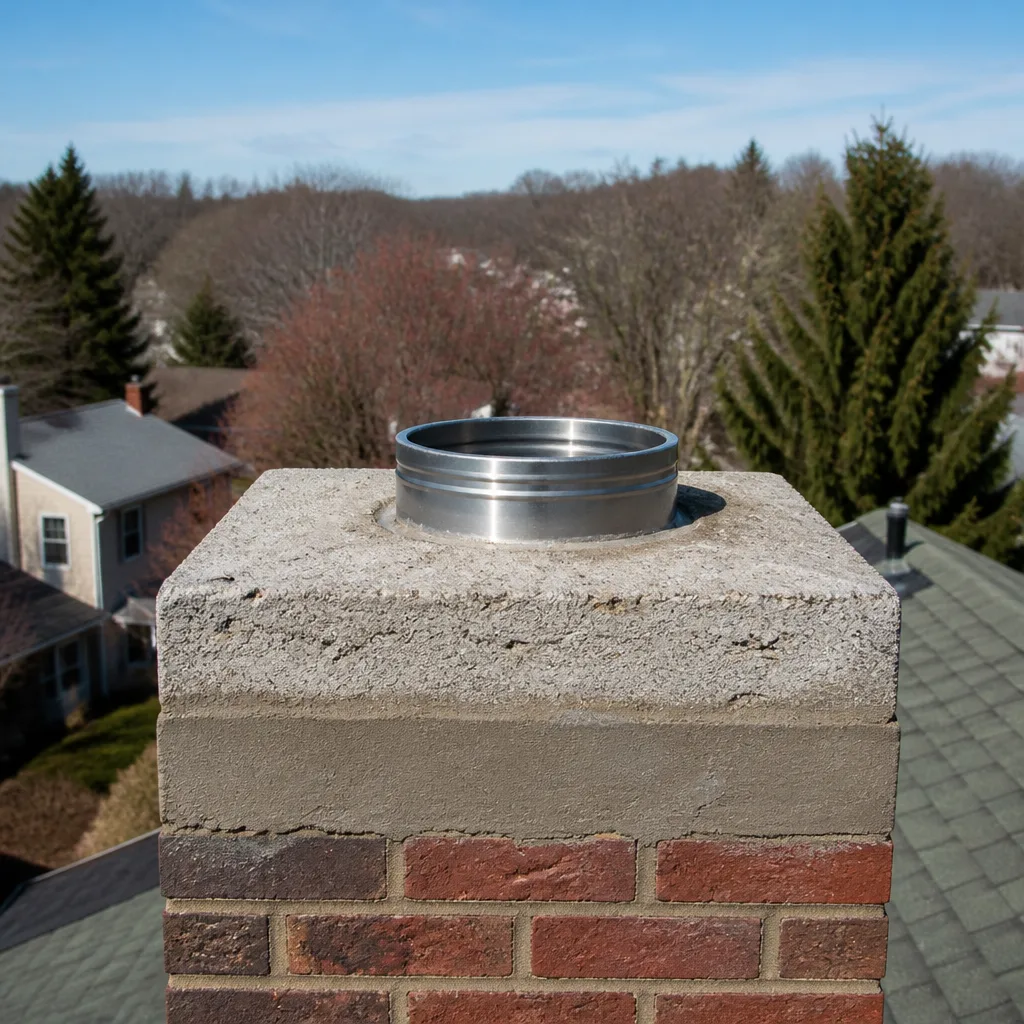 Flue relining
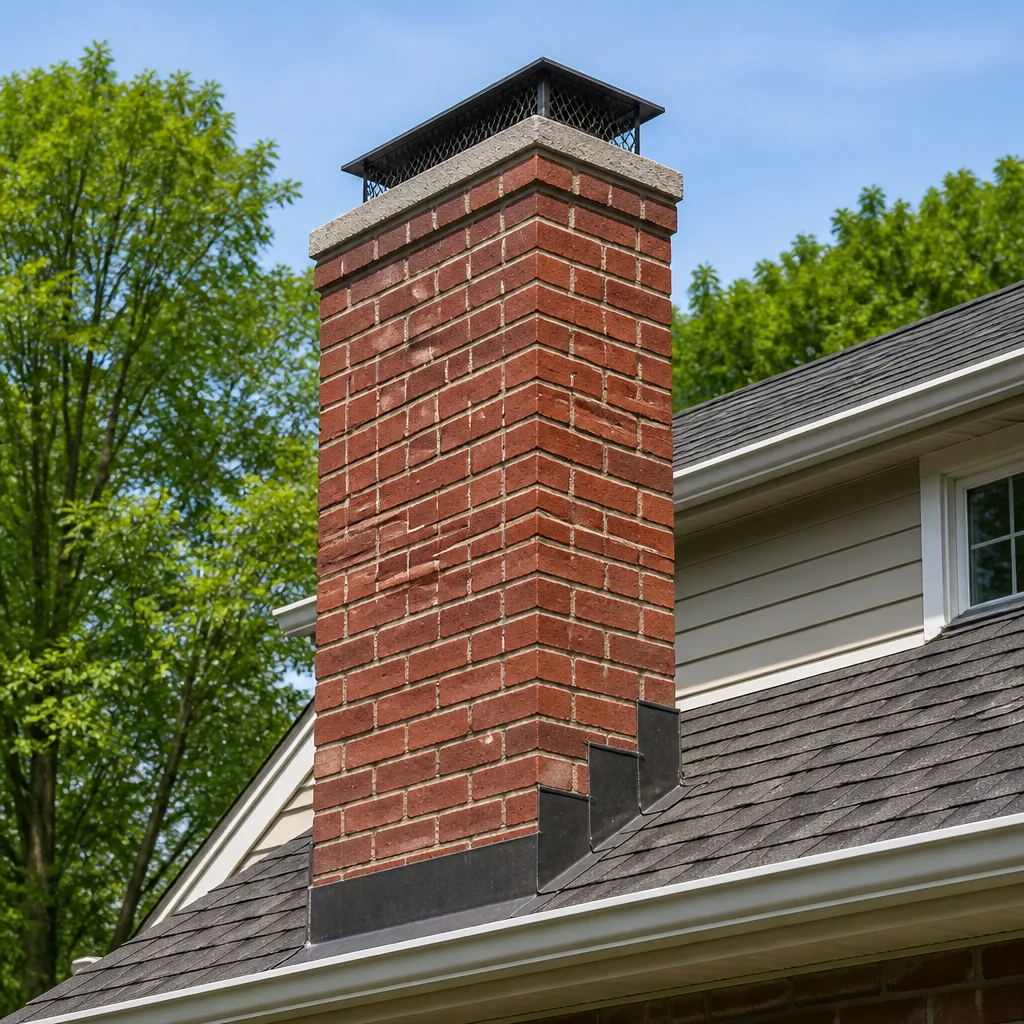 Masonry repair
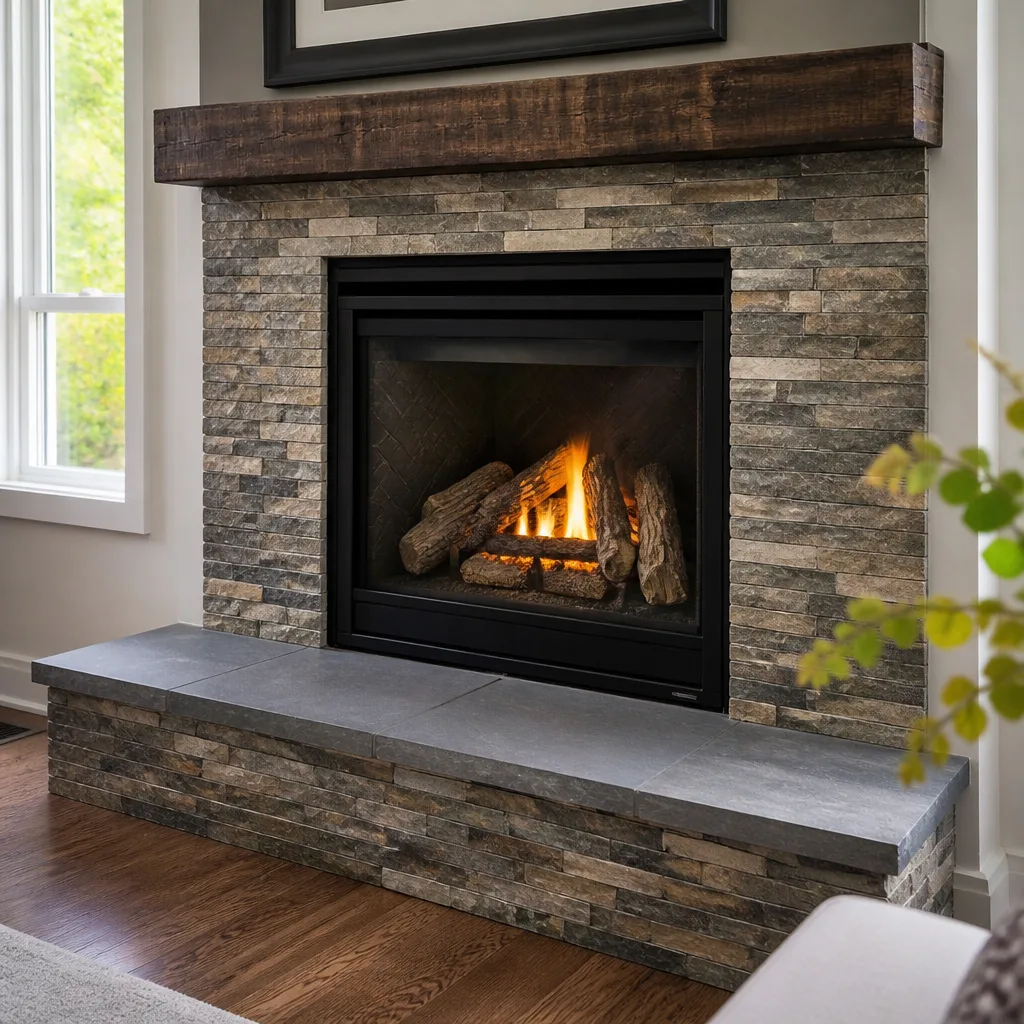 Gas fireplace service
Level 1 sweep and inspection to the NFPA 211 annual standard - flue, crown, cap, and flashing checked and photographed
Chimney sweep logs do not sweep chimneys. They loosen some creosote - which then falls where a brush and vacuum still have to collect it.
Chimney Cleaning Warning Signs: A Borough Park Homeowner’s Reference Guide
A white stain running down a brick chimney isn’t cosmetic. That chalky bloom is efflorescence, and it means water is moving through the masonry and drying on the surface as it exits. The stain is telling you exactly where the breach is. Most of the chimney problems we’re called to in Borough Park announce themselves this way first: something visible from the street, something you can smell in the living room, or something you hear when the wind comes off the harbor. None of it looks dramatic. That’s precisely why it gets missed. This guide is a reference for reading those signals accurately, so you’re not guessing at what’s a normal quirk of an old rowhouse chimney and what needs a trained eye. By the end you’ll know what to look at, what to listen for, and what to leave alone.
Quick Answer
The main chimney cleaning warning signs are efflorescence and water staining on exterior brick, a black or glossy glaze inside the flue (glazed creosote), crumbling mortar or crown cracks, a smoky or musty smell that gets stronger in humid weather, a sulfuric or rotten-egg odor from a gas appliance, rumbling or puffing noises during a burn, and heating bills that climb without any change in how you heat the house. Any one of these is a reason to book an inspection with a camera before you book a cleaning, because the camera tells you whether the flue needs sweeping, resurfacing, or relining.
Styles & brands we work with
- Sweep & inspection
- Caps & crowns
- Flue relining
- Masonry repair
- Gas fireplace service
Table of Contents
- Exterior Warning Signs You Can Read From the Street
- Interior Warning Signs: What the Firebox and Flue Tell You
- Normal Draft Noise vs. Problem Sounds
- Reading Chimney Odors: Acrid, Musty, Sulfuric
- Creosote: Summer Odor vs. Active-Burn Hazard
- Rising Heating Bills as a Chimney Signal
- What a Proper Inspection Actually Involves
- Signs That Look Alarming But Usually Aren’t
Exterior Warning Signs You Can Read From the Street
Borough Park is built tight: brick rowhouses, shared party walls, chimneys rising near the front or rear of the lot where you can see them from the sidewalk or a back window. That gives the homeowner an advantage most people never use. A chimney tells you most of what you need to know on its outside face, if the outside face is where you look.
Start at the top and work down. The crown is the concrete cap at the very top of the chimney, and if it’s cracked, spalled, or pulling away from the flue tile, water is getting in through that gap. Run your eyes down the brickwork and look for three specific things:
- Efflorescence. A white, powdery bloom on the brick face. It means moisture is traveling through the masonry, dissolving salts, and evaporating off the surface. The bloom is your map: it points toward the entry point above it.
- Dark water staining or a green-black shadow line. Usually below the crown or under a flashing joint where the chimney meets the roof. Persistent staining means the water isn’t drying between storms, and the masonry is holding it.
- Crumbling or missing mortar joints. Point at the joints with a finger (don’t push). If mortar powder falls out or the joints look recessed and sandy, the brickwork is weathering and needs repointing. Old mortar doesn’t fail all at once; it works loose joint by joint.
The cap matters too. A properly fitted chimney cap & crown keeps rain, birds, and squirrels out of the flue and keeps the crown from splitting in freeze-thaw cycles, which Borough Park sees plenty of each winter. If your chimney has no cap at all, or a simple metal screen that’s been bent by a branch, that’s an exterior warning sign worth fixing before the next heating season.
What a typical Borough Park rowhouse chimney reveals
Shared chimneys in a rowhouse block behave a little differently than freestanding ones. The flashing where the chimney meets the roof slope is where most leaks start, and on a shared party-wall chimney that flashing has two sides to fail from. If you see a soft brown stain on an interior ceiling below the roofline in winter, and a matching dark streak on the chimney’s outside face above it, the flashing is the likely culprit and the stain is the messenger. That’s a structural repair, not a cleaning, and it’s worth booking as a documented assessment with photos.
Interior Warning Signs: What the Firebox and Flue Tell You
Inside the house, the chimney shows you things you can’t see from outside. The firebox walls, the damper, and the visible portion of the flue tile carry a surprising amount of information about what’s happened up the stack.
Shine a flashlight (or a phone light) into the firebox with the damper open and look for these:
- Wide, open cracks in the firebox brick or its refractory panels. Hairline cracks in the mortar are common in an older fireplace; cracks wide enough to slide a fingernail into are a problem, because they let heat and gases reach the structure behind.
- A stuck or warped damper. A damper that won’t open fully restricts draft, and one that won’t close lets warm air escape the house in winter. Both are fixable without a rebuild.
- Glossy, black, tar-like coating inside the flue. That’s glazed creosote, third-degree creosote, and it’s the hardest kind to remove because it’s bonded to the flue tile. A wire brush alone won’t take it off; it’s the stage where resurfacing with a product like HeatShield often makes more sense than repeated aggressive brushing.
- White, chalky crust inside the flue or on the chimney’s exterior face near the roof line. This can be a sign of moisture reacting with acidic condensate, especially in an unlined flue or an oversized one.
Look at the fireplace itself, too, not only the chimney above it. A gas log set with a sooting flame, a cracked ceramic panel, or a fireplace that won’t stay lit is a fireplace repair item, and a single chimney company that covers both the chimney structure and the fireplace interior can assess it in one visit. A general sweep who only brings a brush will recommend a second contractor for the firebox; a specialist handles it in place.
The damper and smoke chamber
Above the damper is the smoke chamber, the sloping funnel the flue sits on top of. You can’t see it well from below, and that’s why the camera inspection matters. Rough, unparged smoke chamber walls collect creosote and slow the smoke up the flue, and parging them smooth with a product like HeatShield is one of the quieter improvements a good chimney specialist can make. In a Borough Park home with the fireplace used regularly, a parged chamber often means less smoke spillage into the room and a cleaner flue.
Normal Draft Noise vs. Problem Sounds
A chimney is a working system, and a working system makes noise. The trick is knowing which sounds are the system doing its job and which are the system telling you something is wrong. Most of the sound comes from draft: hot air rising up the flue pulling cooler air in behind it. On a windy day, some whistle and some gurgle is normal, especially on an older masonry chimney with a simple cap.
Here’s how to tell them apart:
- Rumbling. A low, rolling rumble during a burn, particularly at the moment a log catches or the fire is fed, is the sound of the flue trying to pull more air than it can. If the fire is small and the rumble is loud, the flue is probably partially obstructed by creosote, a bird nest, or a collapsed tile.
- Whistling. A high, steady whistle that stops when the wind drops is usually air moving around a cap or a flue tile. A whistle that continues even on a still night, or rises when the fire is lit, suggests a draft restriction low in the flue.
- Puffing or back-puffing. A pulsing whoomp-whoomp with smoke spilling into the room is draft reversal. The chimney is momentarily pushing air down the flue instead of pulling it up. Causes include a plugged flue, a house that’s too tight for make-up air, or a chimney that’s too short for the roof line around it.
- A sudden, sharp clank. Metal on metal inside the flue can mean a broken damper hinge or a loose cap. It should be checked, not ignored.
One nuance Borough Park homeowners should know: rowhouse chimneys are long and draft hard, because they run high above the roof and pull a strong column of hot air. A well-drafted rowhouse chimney is quieter than a suburban one in most weather. So if yours starts rumbling or puffing after years of quiet operation, that change is the signal. Something changed inside the flue, not the weather.
When the noise is a safety matter
Puffing with visible smoke in the room, or a rumble you can feel in the floor during a normal burn, isn’t a “quirks of an old chimney” sound. Those are the moments to stop burning, open a window for cross-ventilation if smoke is present, and book an inspection before the next fire. Carbon monoxide has no smell and no sound, which is exactly why the sounds matter: they tell you when draft has failed.
Reading Chimney Odors: Acrid, Musty, Sulfuric
Your nose can distinguish three very different chimney problems in a Borough Park home, and each one points to a specific cause and a different scope of work. Matching the smell to the cause saves a lot of guessing.
| Odor | What it usually indicates | What to do |
|---|---|---|
| Acrid, sharp, smoky | Creosote in the flue, or a draft issue pushing exhaust into the room during a burn | Sweep and inspect before the next fire |
| Musty, damp, “old basement” | Water ingress through the crown, cap, or masonry; damp creosote releasing odor | Exterior inspection to find the water path; repair the crown or cap |
| Sulfuric, rotten egg | Gas appliance by-product, or a disconnected or blocked gas flue | Stop using the appliance and call for an inspection immediately |
| Smoky in the room with no burn | Draft reversal pulling outside air (and any soot it contains) down the flue | Inspect the flue for obstruction and check the cap |
Musty odor deserves a specific note. In a Borough Park rowhouse, damp in the chimney is easy to mistake for a damp basement, but the two smell different if you follow it to the source. Walk up to the fireplace and put your face near the damper on a humid summer afternoon. If the musty smell is strongest right there and fainter in the basement, the chimney is holding moisture, and the likely source is the crown or cap above. That’s a repair, not a cleaning.
Sulfuric smell is the one odor that’s a same-day call. If the fireplace or another appliance is gas-fired and you smell rotten egg, don’t burn or use anything, don’t hit a light switch in the room, and get someone out to look at the flue and the appliance connection. That combination can be a carbon monoxide hazard, and a chimney specialist can assess the flue while a gas professional checks the appliance.
Creosote: Summer Odor vs. Active-Burn Hazard
Creosote smell is the most misunderstood warning sign, because the exact same smell can mean something completely different depending on when it shows up. In summer, creosote odor is a nuisance. During an active burn, it’s a hazard. Knowing the difference matters.
Summer creosote odor is usually a nuisance
Creosote is a tar condensed from wood smoke onto the cooler upper walls of the flue. In summer, when the weather is warm and humid, the deposits soften slightly and release an odor through the damper. That’s normal behavior, not a sign of an imminent fire. It’s unattractive in a living room near a fireplace that’s not in use, and a sweep in late summer or early fall takes care of it.
Creosote odor during an active burn is a different story
If you smell creosote sharply while a fire is burning, that means the deposits are being re-heated and vaporized. That’s the sequence where the creosote deposits ignite. You won’t smell a chimney fire if it’s a small one; slow-burning chimney fires can be quiet and short. The signal is the smell, then a roar, then a vibration in the flue. A loud, rumbling chimney fire is an emergency: get out, call the fire department, and don’t try to extinguish it yourself.
Creosote buildup stages are worth knowing for reading your own chimney:
- Stage one: sooty, light, flaky. Swept off with a standard brush.
- Stage two: crusty and brittle, harder to remove but still responsive to brushing.
- Stage three: glazed, tar-like, bonded to the flue liner. Requires rotary cleaning and often resurfacing with a product like HeatShield to correct the liner interior.
The transition from stage two to stage three is slow and depends on how hot the fire burns and how often the chimney is swept. A rowhouse chimney in Borough Park that’s swept every heating season rarely reaches stage three; one that’s gone a couple of seasons without a sweep commonly does.
Rising Heating Bills as a Chimney Signal
If your gas or oil bill climbs without a change in how you heat the house, the chimney is a less-obvious but very plausible cause. A chimney is not just a chimney; it’s part of the enclosure of the house. If it’s leaking air or moisture, it’s costing you money quietly, month after month, and the utility bill is the first notice you’ll get.
Here’s the mechanism. A masonry or metal flue that’s partially blocked or has a broken tile pulls less efficiently than it should, and the appliance (usually a boiler in a Borough Park rowhouse) runs longer to deliver the same heat. A chimney with failing mortar and a cracked crown lets water in, which damages the liner and can drive up condensate problems, and condensate causes the boiler or furnace to cycle. And a chimney flue that’s too large for the appliance drafts poorly: the appliance is starved for draft and burns incompletely.
The warning signs to look for alongside a rising bill:
- Your boiler runs noticeably longer or reaches its set temperature more slowly.
- Your radiator or baseboard system heats up in the front of the house but not the back.
- The flue smells of tar or sulfur after heating cycles.
- You see soot or a sooty haze around the flue connection at the appliance.
None of that means the chimney is the only possible cause, and we’re not in the business of guessing. But if you’re seeing a higher bill and one of the signs above, an inspection with a camera is a diagnostic step that rules the chimney in or out before you spend money on other possible causes. In our experience across Borough Park, the combination of a rising bill and a visible exterior sign like efflorescence or crumbling mortar is a strong indicator worth investigating in one visit.
What a Proper Inspection Actually Involves
A proper chimney inspection is a formal, documented assessment with a camera, photos, and a written report, not a quick look with a flashlight. That’s the difference between a “free check” that ends in an upsell and an inspection that tells you honestly whether work is needed and whether it can wait.
The process, in order:
- Exterior assessment. Crown, cap, flashing, mortar joints, and masonry face from the roof line down. Photos taken of anything flagged.
- Firebox and damper check. Visible cracks, damper operation, refractory condition, and fireplace interior for soot or damage.
- Flue camera scan. A video camera run up the flue to look for creosote stage, broken tiles, gaps at joints, obstructions, and signs of water.
- Appliance connection check. For a gas or oil appliance, the flue connection at the appliance is examined for draft and soot.
- Written report with photos. You see the same images the technician sees, and the recommendations come with them.
- Recommendation and estimate. Any corrective work is priced with a written estimate, and it’s clear which jobs are urgent and which can wait until spring or until next season.
This order reflects a discipline we’ve built the business around: inspection first, recommendation second. The camera evidence is the point. You shouldn’t have to take anyone’s word for the fact that your liner needs resurfacing or your crown needs rebuilding; you should see it and decide. A company that leads with a sweeping estimate and follows with a “by the way, your liner is shot” is doing it backwards.
Do you always need a full inspection?
No. If you’ve had the chimney swept recently and here for a routine annual sweep with a clean recent inspection, a camera scan may be redundant. But if you’re seeing any of the warning signs in this guide, a formal inspection is the right first step. It’s not the same service as a sweep and shouldn’t be bundled as one.
Signs That Look Alarming But Usually Aren’t
Not every oddity in your chimney is a problem, and a good specialist will tell you when there’s nothing to do. These are the common false alarms we see in Borough Park rowhouse chimneys:
- A little black haze on the damper. Soot accumulation on the damper plate is normal and doesn’t indicate a cracked liner. A sweep removes it; the crack would show in the flue camera scan and the exterior face.
- A ceramic fireplace insert with a crack in the mortar, not the panel. Mortar joints in a firebox brick are expected to show fine cracks from heating and cooling over time. A cracked panel that separates into pieces is the real problem; fine mortar cracks are repointed when convenient.
- A faint draft sound when the wind is up. Almost all Borough Park chimneys make some noise in a strong wind. The sound only matters when it’s paired with a change in draft, smoke in the room, or a rumble during a burn.
- Faint creosote smell on a hot, humid summer day. A nuisance, not a hazard. A sweep before the heating season handles it.
- A small chip at the base of a firebox brick. Normal wear from loading wood and cleaning. Unless the chip exposes a joint or a missing brick, it’s not a safety issue.
Where we’d draw the line on “false alarm” is anything involving water. Water in a chimney is never normal; even efflorescence that looks minor is telling you the masonry is wet. That’s the one exterior sign we’d always look at in person.
Common Mistakes to Avoid
- Treating efflorescence as a cosmetic issue. That white stain is moisture moving through the masonry, and painting over it traps the water inside, where freeze-thaw cycles in a Borough Park winter do more damage to the brick face than the paint was meant to hide.
- Assuming a stuck damper is just a stuck damper. A damper that won’t close is wasting heat all winter, and one that won’t open is restricting draft. Either is worth fixing before the next heating season, not after.
- Skipping the inspection because “nothing dramatic is happening.” Slow roof leaks, hairline flue cracks, and stage-two creosote rarely look dramatic. The absence of drama is the reason the camera matters.
- Hiring a general handyman for chimney work. Brick, mortar, flue tiles, and liner systems are a trade of their own. The working professionals we connect Borough Park homeowners with use trade-grade materials like DuraFlex flex liners and Famco caps, because the materials are specified for chimney duty, not adapted from general construction.
- Burning freshly cut or wet wood all winter. It puts a lot more creosote into the flue than seasoned wood does, and stage-two buildup can become stage three within a season. Split and season wood before it goes in the fireplace.
- Putting off a cap replacement. A missing or damaged cap is one of the simplest fixes a chimney has, and it’s the leading way birds, squirrels, and rain get into a flue. Replacing it stops a whole class of future problems.
- Sweeping when the real problem is water. A sweep removes creosote, but it won’t do anything to a wet chimney. If you have both, the water gets fixed first, or the next sweep ends with a wet flue again.
See the difference
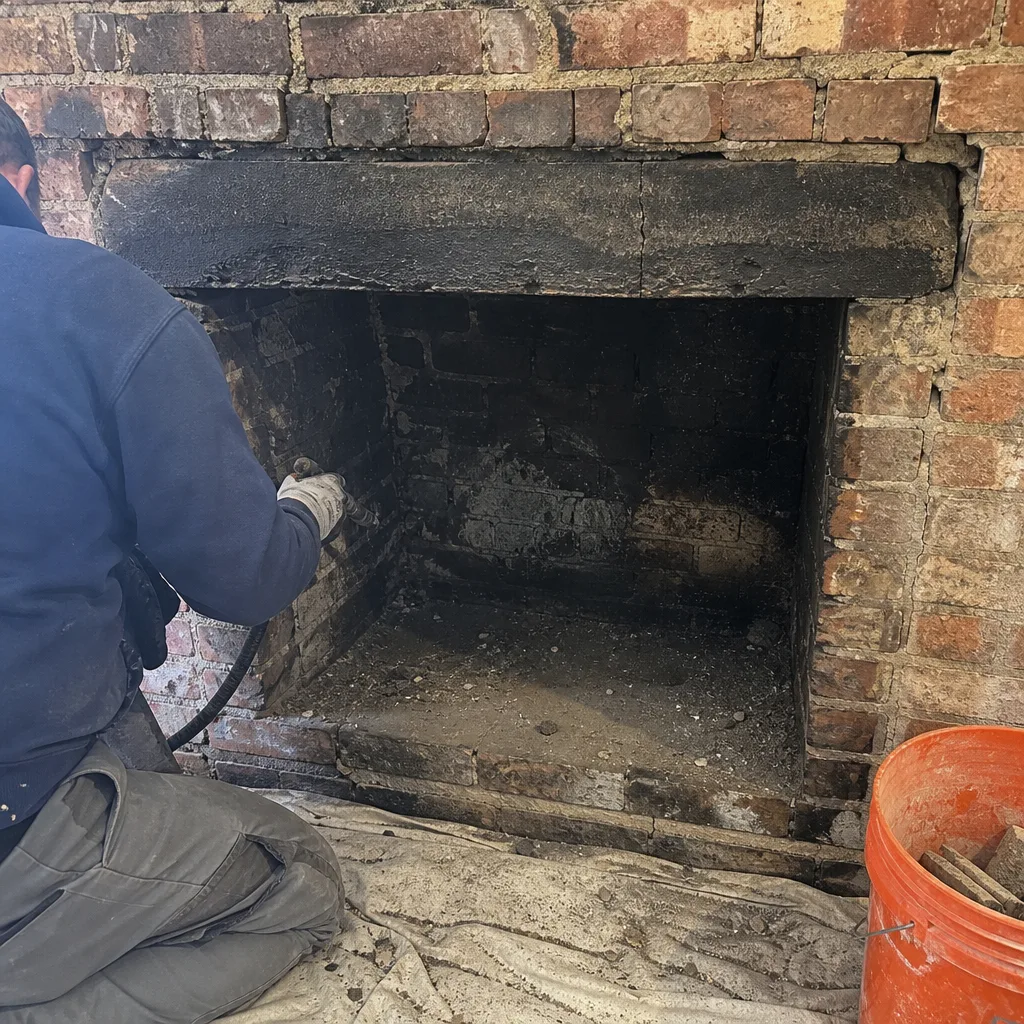 Before
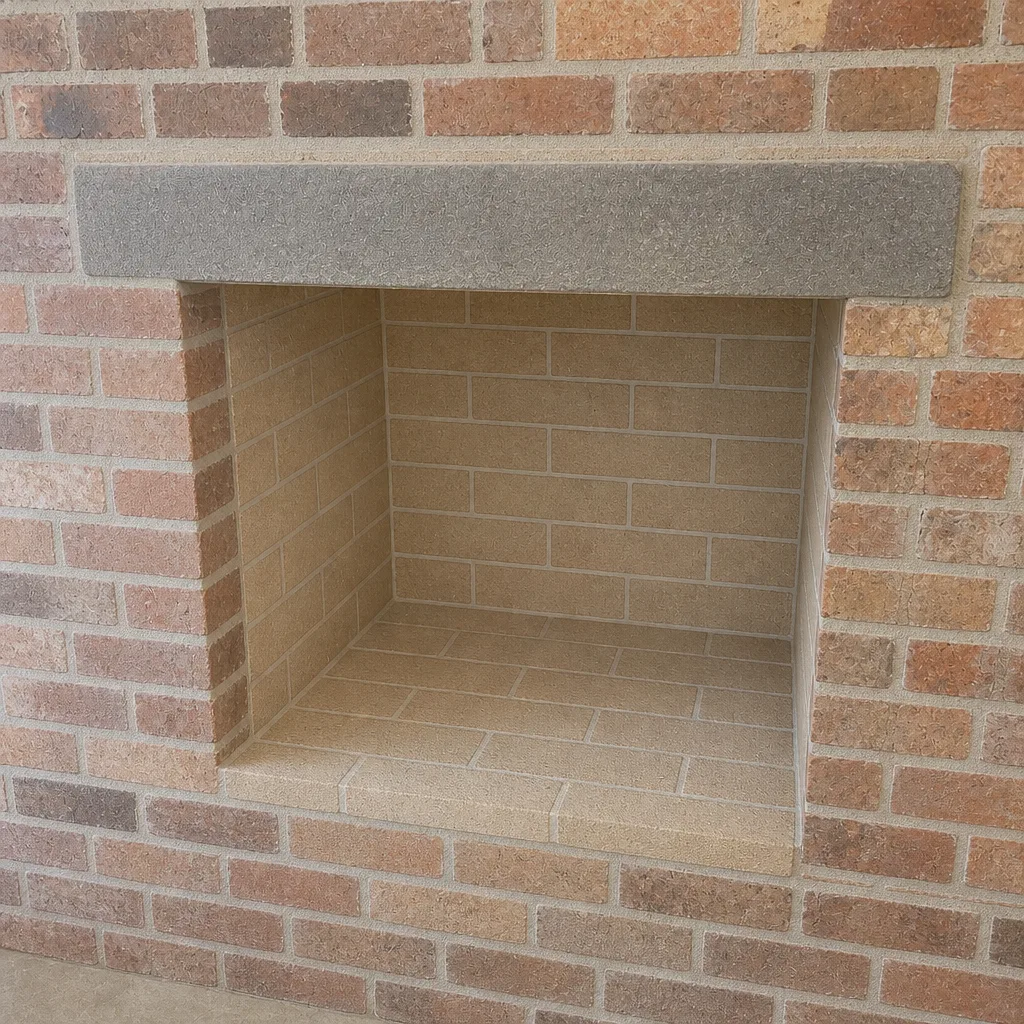 After
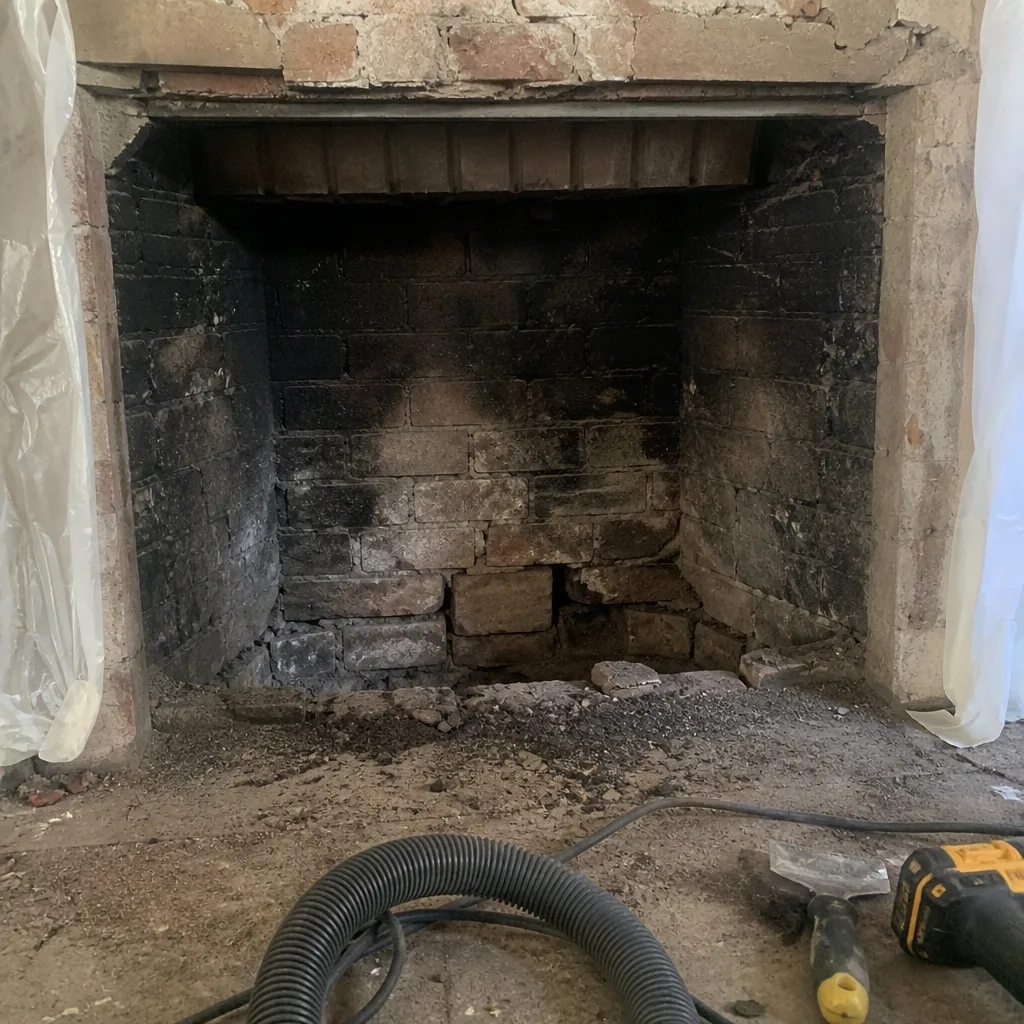 Before
 After
 Before
 After
When to Call a Professional
Some of what’s in this guide you can check yourself: the exterior face from the sidewalk, the firebox with a flashlight, the smell of the damper on a humid day. The rest belongs with a trained professional. Call when you see efflorescence or a dark water stain on exterior masonry, when the crown is cracked or the cap is missing, when the firebox shows cracks you can feel with a fingernail, when you smell acrid or sulfurous odor during use, when puffing or rumbling happens during a normal burn, or when your heating bill climbs and one of the accompanying signs shows up.
Our technicians have up to 9 years of experience reading exactly these signals, and the work is handled end to end with a camera inspection and a photo report included. If the chimney needs relining, we connect you with a professional who installs DuraFlex flexible liners; if a liner just needs resurfacing, the local pro can apply chimney repair with HeatShield rather than a full replacement. One crew, start to finish, no handoff to a second contractor. Chimney Sweep Borough Park offers free estimates in Borough Park; call (833) 554-1032 to book one. We answer 24/7. Fast dispatch from 7am to 7pm, Sunday through Friday.
If you’d just like the basics done well, a routine chimney sweep with a camera look at the flue is a good starting point, and it’s usually how a first visit here goes.
Frequently Asked Questions
A cleaning is right when the camera shows creosote buildup without cracks, water, or tile damage; an inspection is right whenever you see a warning sign or haven’t had the chimney looked at in a while. In practice, we run the camera first so the recommendation is based on what’s actually up the flue. In Borough Park rowhouses, a clean flue at the start of heating season is a common find even when the owner suspected a bigger problem. Call (833) 554-1032 for a free estimate on the right service.
It’s efflorescence, and it means water is moving through the masonry. The most common sources in a Borough Park rowhouse are a cracked crown, failed flashing at the roof line, and crumbling mortar joints on the exterior face. It’s not cosmetic, and painting over it traps the water and makes the problem worse. Have an exterior assessment done and let the technician find the entry point before deciding on the repair.
Yes, mild creosote odor on a warm, humid day is normal condensation behavior and not a hazard. Creosote odor during an active burn is the opposite: that’s deposits being re-heated and vaporized, and it’s the kind of signal that warrants stopping the burn and booking an inspection. The difference is timing: summer smell is a nuisance, burn-time smell is a hazard.
A quiet rumble as the fire catches is normal draft behavior; a loud rumble at every burn, or a rumble you can feel in the floor, is not. That pattern usually means the flue is partially obstructed, either by creosote, a bird nest, or a fallen tile. It’s the kind of thing the camera inspection catches in minutes, and it’s worth doing before the next fire. Call (833) 554-1032 and we’ll get you on the schedule.
Yes. A partially blocked flue, a damaged liner, or a chimney drawing too much air will make a Borough Park boiler work harder to reach the same temperature. Water in the masonry also causes condensate problems that can affect how the appliance cycles. If the bill goes up without a change in usage, and you see any of the exterior or interior signs in this guide, a camera inspection is a sensible diagnostic step. Estimates are free.
Once per heating season for a wood-burning fireplace that’s used regularly, and once a year for an oil or gas flue even if it’s less busy. Rowhouse chimneys draft well and burn hot, which helps, but the long flue run still accumulates creosote in the cooler upper sections. A sweep at the end of the season, followed by an inspection, is the pattern that catches problems before the next cold snap. Call us to book the sweep and the inspection together.
The Bottom Line
Most chimney problems that turn into expensive repairs start as something quiet: a white bloom on the brick, a faint musty smell, a rumble at every burn, a bill that’s a little higher than last winter. The tools in this guide let you read those signals accurately instead of dismissing them. Efflorescence points at the water path, glazed creosote points at a liner that needs resurfacing, and burn-time creosote odor points at a job that shouldn’t wait. Inspection first, recommendation second is how a proper assessment works, and camera evidence is what makes the recommendation trustworthy. If you’ve found one of these signs on your own chimney, the next step is a documented inspection with photos, a written report, and a firm estimate. Call Chimney Sweep Borough Park at (833) 554-1032 for a free estimate. We answer 24/7. Fast dispatch from 7am to 7pm, Sunday through Friday.
For routine service, start with Chimney Sweep Borough Park. And if you’d like the whole chimney assessed and repaired under one roof, from the cap and crown down to the firebox, that’s the scope we’re built for.
Written by the team at Chimney Sweep Borough Park.